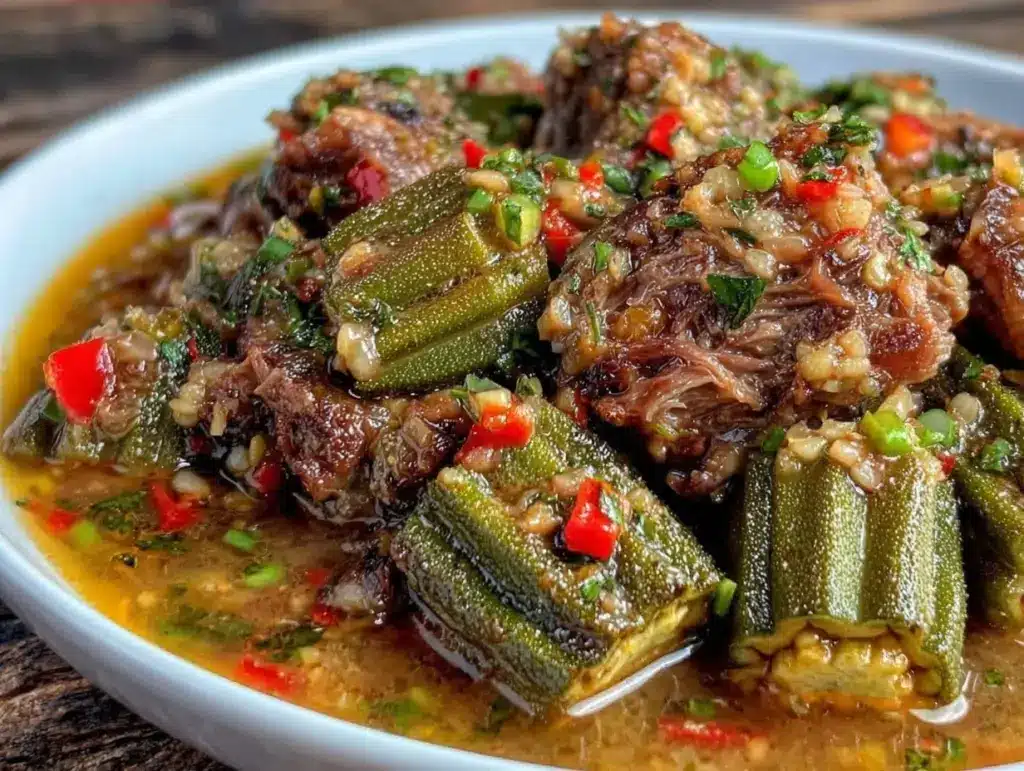
I still remember the first time my aunt served me Nigerian okra soup on a chilly evening in Lagos. The moment I took that first spoonful, the rich, earthy flavors wrapped around me like a cozy blanket. The way the okra’s natural slipperiness mixed with the spicy broth—it was comfort in a bowl, the kind of meal that makes you feel connected to home, no matter where you are.
Since then, I’ve made this delicious Nigerian okra soup recipe more times than I can count, tweaking it just enough to make it my own without losing the soul of the dish. If you’ve never tried okra soup or have been intimidated by how to make it, I promise this version is straightforward, authentic, and downright satisfying. Ready to bring a taste of traditional African comfort to your kitchen? Let’s dive in.
Why You’ll Love This Recipe
Okay, I have to admit—this Nigerian okra soup recipe has completely changed my weeknight dinner game. There’s just something about it that feels nourishing and indulgent at the same time.
- ✅ Authentic flavors with simple ingredients: You don’t need a long list of exotic spices to get that classic Nigerian taste. This recipe sticks to what matters—fresh okra, palm oil, and a few key seasonings.
- ✅ Quick to prepare but feels like a labor of love: I can have this soup simmering in under 30 minutes, but it tastes like I spent hours on it. Perfect for when you want comfort food without the fuss.
- ✅ Perfect for any occasion: Whether it’s a casual dinner or you want to impress friends with a genuine African dish, this soup fits the bill every time.
- ✅ Naturally gluten-free and packed with nutrients: Okra brings fiber and vitamins, while the meat adds protein, making it hearty and wholesome.
This is the kind of recipe that makes you feel like you’ve unlocked a little secret from generations past. Every time I make it, I’m reminded of family gatherings, laughter, and the comforting aromas that only a traditional Nigerian kitchen can deliver.
What Ingredients You’ll Need
Here’s the thing about this Nigerian okra soup recipe: most of the ingredients are probably already in your kitchen or easy to find at your local international grocery store. I’ve broken down the list to help you understand why each one matters.
- Fresh okra (about 500g / 1 lb) — The star of the show. I highly recommend fresh okra here for the best texture and flavor. If you can’t get fresh, frozen works but the soup won’t be quite the same.
- Palm oil (¼ cup / 60ml) — This gives the soup its signature rich color and earthy taste. I use red palm oil straight from the bottle—don’t substitute with vegetable oil unless you want a very different flavor.
- Beef or assorted meat (500g / 1 lb) — Traditionally, a mix of beef, tripe, and cow skin works best. I usually stick to beef and a bit of dried fish or stockfish for that umami punch.
- Stockfish or dried fish (optional, about 100g / 3.5 oz) — Adds depth and that unmistakable smoky flavor. You can skip if you’re not a fan, but it’s worth trying at least once.
- Onions (1 medium) — Chopped finely to build the flavor base.
- Scotch bonnet peppers (1-2, chopped) — For heat! Adjust based on your spice tolerance. I always keep a backup bell pepper if I want a milder version.
- Seasoning cubes or bouillon (2 cubes) — I prefer Maggi brand, but use what you trust. Adds that savory kick.
- Water or beef stock (3-4 cups / 700-950 ml) — To create the broth that holds everything together.
- Salt and pepper — To taste.
- Ugu leaves or spinach (optional, a handful) — Adds a fresh, green element. If you can find ugu (fluted pumpkin leaves), go for it. Spinach is a great substitute.
I always recommend going for fresh, high-quality ingredients here. The palm oil, in particular, can vary a lot in taste and color, so pick one that’s bright red and fragrant. Also, if you’re sourcing stockfish for the first time, ask your local African market for tips—they usually have the best recommendations.
Equipment Needed
You don’t need fancy tools for this Nigerian okra soup recipe. I’ve cooked this in kitchens with just the basics, and it turns out great every time.
- Large pot or deep saucepan — Big enough to hold your meat and soup comfortably. I use a heavy-bottomed pot because it distributes heat evenly and prevents burning.
- Sharp knife and cutting board — For chopping your okra, onions, and peppers.
- Wooden spoon or heatproof spatula — I’m a wooden spoon fan—it doesn’t conduct heat and feels good in the hand.
- Measuring cups and spoons — For your liquids and seasoning. I eyeball a lot, but measuring helps keep consistency.
- Colander or sieve — To wash and drain the okra and vegetables.
Bonus: If you have a blender or food processor, you can use it to chop the okra finely. I usually do this by hand because I love the texture, but it’s totally optional.
How to Make It: Step-by-Step
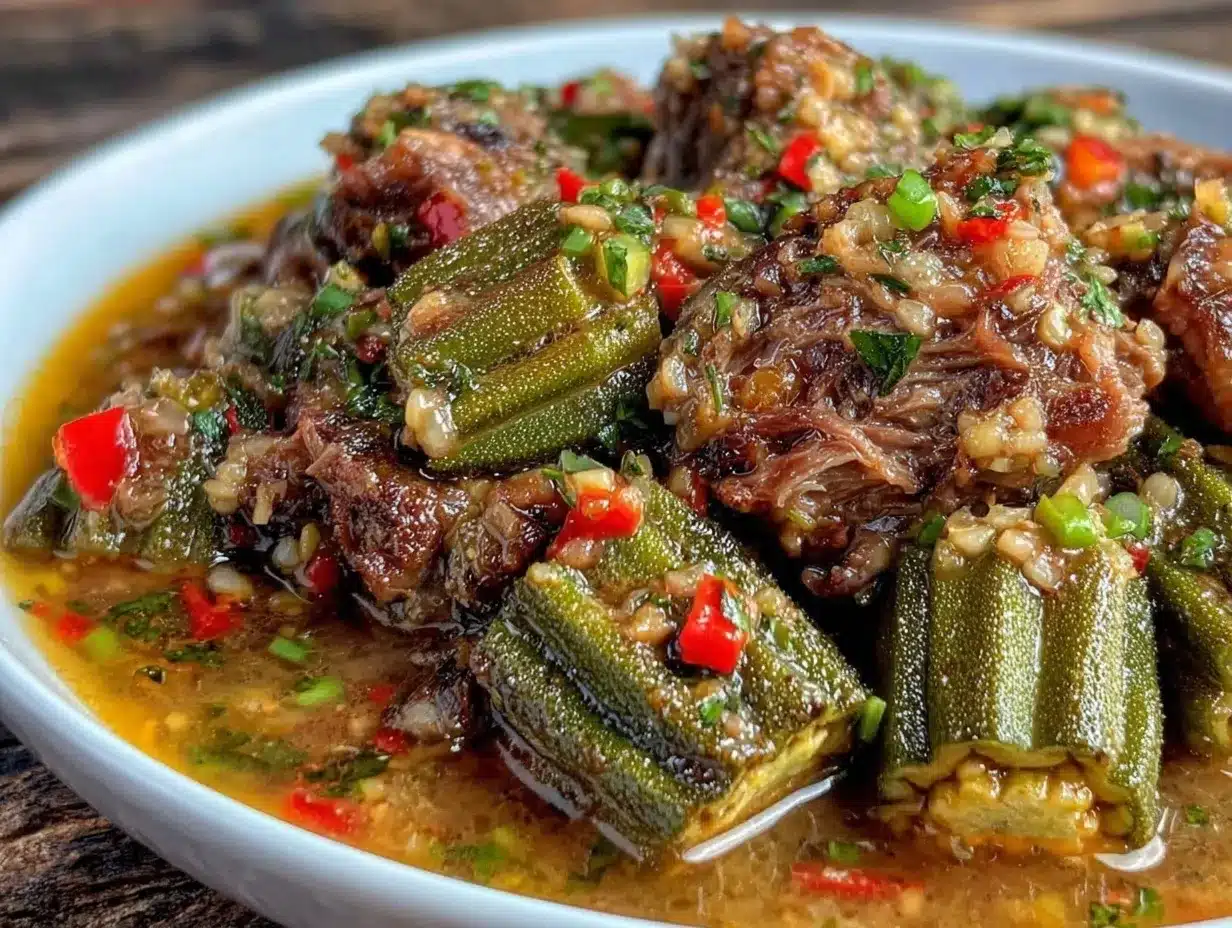
Alright, here’s how I make this delicious Nigerian okra soup recipe. I’ll walk you through every step, including the little tricks that make it taste like it came straight from a Nigerian kitchen.
- Prepare the meat (30-40 minutes)
Start by washing your beef or assorted meat thoroughly. Place it in your pot, cover with water or stock (about 3 cups / 700ml), and bring to a boil. Add half the chopped onion and one seasoning cube. Simmer gently until the meat is tender—this usually takes about 30-40 minutes depending on the cuts. Skim off any foam that rises to the surface. - Prepare the okra (5-10 minutes)
While the meat is cooking, wash your okra and chop it into small pieces. Some people like to blend it for a smoother texture, but I prefer chopping by hand to keep a bit of bite. Set aside. - Sauté the aromatics (5 minutes)
In a separate pan or once the meat is cooked, heat the palm oil over medium heat. Add the remaining chopped onion and scotch bonnet peppers. Stir and cook for 3-5 minutes until fragrant. The kitchen should smell incredible at this point. - Add the meat and broth to the palm oil (2 minutes)
Add your cooked meat (with the broth) into the palm oil mixture. Stir gently to combine. - Add the okra and season (5 minutes)
Add the chopped okra to the pot, stirring well. Then add the remaining seasoning cube, salt, and pepper to taste. Let the soup simmer on low heat for about 5 minutes. This is where the okra releases its signature slimy texture, which thickens the soup naturally. - Add greens and final touches (3-5 minutes)
If you’re using ugu leaves or spinach, add them now and stir until just wilted. Taste and adjust seasoning if needed. - Simmer and serve (5 minutes)
Let everything come together for another 5 minutes on low heat. The soup should be thick, glossy, and bursting with flavor. Remove from heat and get ready to enjoy!
Pro tip: If your soup feels too thick, add a splash of water or stock and stir. If it’s too thin, a little longer simmering usually thickens it up nicely.
My Best Tips & Techniques
I’ve made this Nigerian okra soup recipe so many times that I’ve learned a few tricks to make sure it always turns out perfect.
- Don’t rush the meat: Tender meat is the heart of the soup. I usually start the meat simmering first so it has plenty of time to soften and soak up flavors.
- Use fresh okra when possible: It makes a world of difference in texture. Frozen okra can be a bit watery, which dilutes the richness.
- Blend or chop okra based on your texture preference: I personally like the slight chew from chopped okra, but using a blender gives you a smoother, almost stew-like soup.
- Be gentle with the palm oil: Heat it on medium, not high, to avoid burning and bitterness. The oil should smell earthy and rich, not acrid.
- Adjust heat carefully: Scotch bonnet peppers are potent. If you’re nervous, start with one pepper and add more after tasting.
- Don’t skip the greens: Adding ugu leaves or spinach boosts flavor and adds a fresh balance to the rich soup.
- Let the soup sit for a few minutes: Like many stews, okra soup tastes even better after resting for 10 minutes—flavors meld and intensify.
- Clean as you go: I always wash and prep ingredients before cooking. Makes the cooking flow smoother and less stressful.
Learning these little things took me a few tries (and a few near disasters), but now the soup comes out right every time. You’ll get there too!
Ways to Mix It Up
If you want to personalize this delicious Nigerian okra soup recipe, here are some variations I’ve tried and loved (or want to try):
- Seafood Okra Soup: Swap out beef for fresh shrimp, crab, or fish. I add the seafood in the last 10 minutes so it stays tender and juicy.
- Vegetarian Version: Skip the meat and use vegetable broth with mushrooms for umami. Add extra greens like kale or collard greens.
- Spicy Upgrade: Add extra scotch bonnet peppers or a dash of cayenne for serious heat. I do this when I want a fiery kick.
- Okra & Tomato Twist: Add chopped fresh tomatoes or tomato paste to the palm oil base for a tangy depth. It’s a different flavor profile but still delicious.
- Thicker Soup: Blend half the okra and chop the rest for a mix of smoothness and texture. This is my kids’ favorite way.
- Serve with Different Starches: Traditionally eaten with fufu, pounded yam, or eba, but I’ve also enjoyed it with rice or even crusty bread when I’m feeling experimental.
Feel free to experiment! This soup is forgiving and welcomes your personal touch.
Serving Ideas & Storage
This Nigerian okra soup is best served hot and fresh, but here’s how I like to enjoy and store it.
Serving Suggestions:
- Serve with traditional sides like pounded yam, amala, or fufu. If you’re new to these, yam flour (amala) is usually easiest to find.
- For a lighter meal, pair with steamed white rice or even boiled plantains.
- Add a side of sliced avocado or salad for a fresh contrast.
- For gatherings, pour the soup into a beautiful bowl and garnish with fresh greens or chopped peppers for color.
Storage Tips:
- Store leftovers in an airtight container in the fridge for up to 3 days. The flavors actually deepen, so leftovers can be even better.
- Reheat gently on the stove over low heat, adding a splash of water or broth if it’s too thick.
- You can freeze the soup (without the sides) for up to 2 months. Thaw overnight in the fridge and stir well before reheating.
- If you freeze, I recommend chopping the okra just a bit coarser so it holds up better after thawing.
Nutritional Info & Health Benefits
While I’m definitely not here to preach, I do appreciate that this Nigerian okra soup recipe brings some solid nutrition to the table.
| Per Serving (approx.) | Amount |
|---|---|
| Calories | 280 |
| Protein | 25g |
| Carbohydrates | 7g |
| Fat | 18g |
| Fiber | 4g |
Health Highlights:
- Okra is packed with fiber and vitamins C and K, which support digestion and immunity.
- The palm oil provides healthy fats and antioxidants (just make sure it’s good quality).
- Protein from beef and fish keeps you full and supports muscle health.
- Low-carb and gluten-free naturally, making it suitable for many dietary needs.
Real talk: yes, it’s rich and flavorful, but it’s also nourishing and satisfying in a way that sticks with you.
Final Thoughts
So that’s my delicious Nigerian okra soup recipe! I get a little nostalgic every time I make it—like I’m sharing a piece of my heritage with whoever’s lucky enough to eat it.
This recipe is more than just a meal; it’s a connection to tradition, family, and comfort. Whether you’re new to Nigerian cuisine or a seasoned fan, I hope it brings warmth and happiness to your table.
Try the variations, play with the spice, and make it yours. And when you do, please come back and tell me how it went! I love hearing your stories and seeing your kitchen wins.
Happy cooking, and may your kitchen smell like home.
FAQs
Q: Can I use frozen okra instead of fresh?
A: Yes, you can! I usually recommend fresh okra for the best texture and flavor, but frozen works in a pinch. Just thaw it fully and drain any excess water so your soup doesn’t get watery.
Q: What can I substitute if I can’t find palm oil?
A: Palm oil has a unique flavor, so there’s no perfect substitute. If you must, use red palm olein oil or a mix of vegetable oil and a touch of tomato paste for color. But honestly, try to get palm oil—it’s worth it.
Q: How do I know when the soup is done?
A: The soup is ready when the meat is tender, the okra is slimy but not mushy, and the flavors have melded together. You’ll see a thick, glossy broth and smell that rich, earthy aroma.
Q: Can I make this soup vegetarian?
A: Absolutely! Use vegetable broth and add mushrooms or smoked tofu for umami. Just skip the meat and fish, and consider adding extra greens or beans for protein.
Q: Can I prepare this ahead of time?
A: Yes! I often cook the meat and broth a day ahead and refrigerate. When you’re ready, heat the broth, add the palm oil and okra, and finish cooking. This actually enhances the flavors.
Pin This Recipe!
Delicious Nigerian Okra Soup Recipe Easy Traditional African Comfort Meal
- Total Time: 55 minutes
- Yield: 4 servings
Description
A rich and authentic Nigerian okra soup recipe featuring fresh okra, palm oil, and tender beef, perfect for a comforting and nourishing meal.
Ingredients
- Fresh okra (about 500g / 1 lb)
- Palm oil (¼ cup / 60ml)
- Beef or assorted meat (500g / 1 lb)
- Stockfish or dried fish (optional, about 100g / 3.5 oz)
- Onions (1 medium, chopped)
- Scotch bonnet peppers (1-2, chopped)
- Seasoning cubes or bouillon (2 cubes)
- Water or beef stock (3-4 cups / 700-950 ml)
- Salt and pepper to taste
- Ugu leaves or spinach (optional, a handful)
Instructions
- Prepare the meat: Wash beef or assorted meat thoroughly. Place in a pot, cover with water or stock (about 3 cups / 700ml), add half the chopped onion and one seasoning cube. Bring to a boil, then simmer gently for 30-40 minutes until meat is tender, skimming off foam.
- Prepare the okra: Wash and chop okra into small pieces. Optionally blend for smoother texture.
- Sauté aromatics: Heat palm oil over medium heat. Add remaining chopped onion and scotch bonnet peppers. Cook for 3-5 minutes until fragrant.
- Add meat and broth: Add cooked meat with broth into the palm oil mixture and stir gently.
- Add okra and season: Add chopped okra, remaining seasoning cube, salt, and pepper. Simmer on low heat for about 5 minutes until soup thickens.
- Add greens: Add ugu leaves or spinach if using, stir until wilted. Adjust seasoning to taste.
- Simmer and serve: Let soup simmer for another 5 minutes on low heat. Remove from heat and serve.
Notes
Use fresh okra for best texture; frozen okra can be used but may dilute richness. Heat palm oil on medium to avoid bitterness. Adjust scotch bonnet peppers to control heat. Let soup rest for 10 minutes before serving for better flavor melding. If soup is too thick, add water or stock; if too thin, simmer longer.
- Prep Time: 15 minutes
- Cook Time: 40 minutes
- Category: Main Course
- Cuisine: Nigerian, African
Nutrition
- Serving Size: 1 bowl (approx. 1 cu
- Calories: 280
- Fat: 18
- Carbohydrates: 7
- Fiber: 4
- Protein: 25
Keywords: Nigerian okra soup, African comfort food, traditional Nigerian recipe, okra soup recipe, palm oil soup, gluten-free soup, beef okra soup