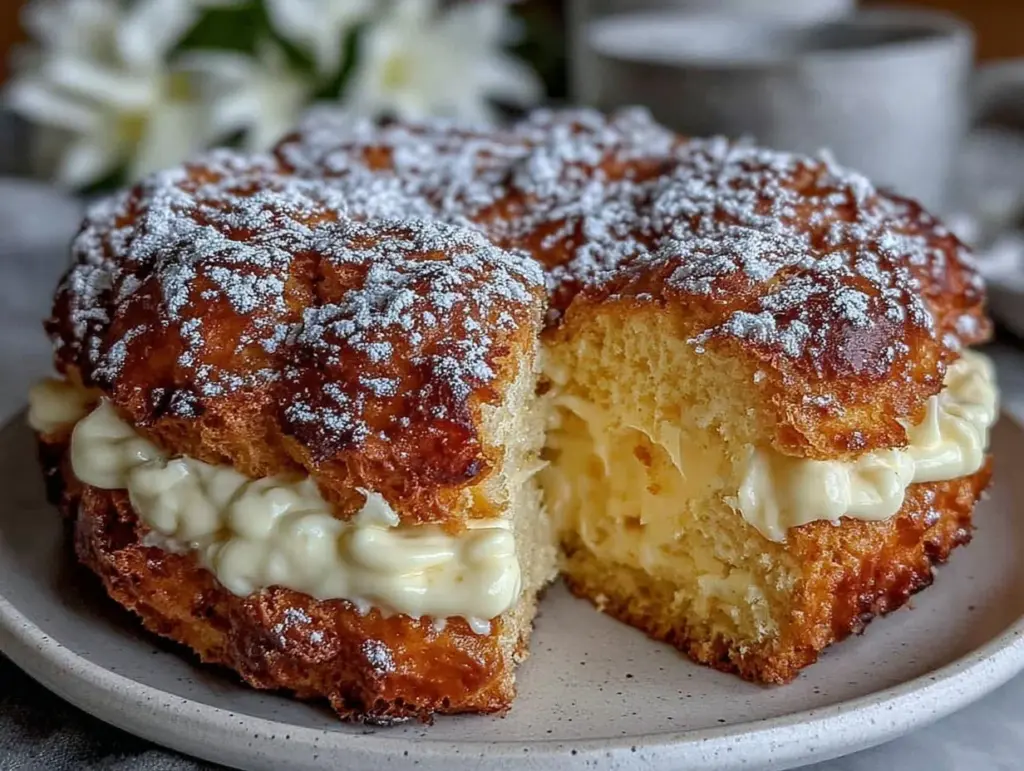
I still remember the first time I bit into a slice of Karpatka—this Polish Carpathian cream cake that looks like a mountainous dream on a plate. It was at a family gathering, and the moment the light, fluffy pastry crust gave way to that luscious, creamy filling, I was hooked. If you haven’t tried making this homemade dessert yet, trust me, it’s worth every minute in the kitchen.
Karpatka isn’t just any cake. It’s a nostalgic recipe with roots in Polish kitchens, but I’ve tweaked it over the years to make it easier, foolproof, and just as indulgent as the originals I fell in love with. Whether you’re craving a showstopper for dessert or just want to impress with a classic that’s not your everyday chocolate cake, this Karpatka Polish Carpathian cream cake recipe is where it’s at.
After making this recipe a dozen times (yes, I’m that obsessed), I’m sharing everything: how to get those perfect puffy pastry layers, the secret to that silky custard filling, and why you’ll want to make this cake on repeat.
Why You’ll Love This Karpatka Polish Carpathian Cream Cake Recipe
Okay, I need to be honest—this Karpatka Polish Carpathian cream cake recipe has totally spoiled me for other cream-filled desserts. Here’s why I keep coming back to it:
- Cloud-like choux pastry layers: After a few tries, I nailed a light, airy crust that’s crisp on the outside but soft and pillowy inside—just like the Carpathian Mountains it’s named after.
- Silky, vanilla bean custard filling: This isn’t your average pudding. It’s rich but not heavy, with just the right sweetness and a deep vanilla flavor that makes every bite irresistible.
- Simple ingredients, big impact: You probably have everything needed right in your kitchen, and the recipe breaks down into manageable steps even if you’re not a baking pro.
- Showstopper dessert status: Whether it’s a family dinner or a casual get-together, this cake looks like you spent all day on it (but really, it’s all about technique, not time).
This recipe is the kind that makes you feel like you just unlocked a secret passed down through generations. It’s comfort, celebration, and a little bit of magic all wrapped up in one dessert.
What Ingredients You’ll Need for Karpatka Polish Carpathian Cream Cake
Here’s what I love about this ingredient list: it’s straightforward, with no weird stuff hiding in the pantry. I’ve broken it down so you know what each part does, because understanding that makes you feel like a real baker.
- For the Choux Pastry (2 layers):
- 1 cup (240 ml) water — The base for steaming the dough. I use filtered water for cleaner flavor.
- ½ cup (115 g) unsalted butter — Butter is non-negotiable here; it gives you that golden, flaky crust. I swear by European-style butter (Kerrygold is my go-to).
- 1 cup (125 g) all-purpose flour — King Arthur flour gives consistent results, but any good-quality all-purpose flour works.
- 4 large eggs — Room temperature eggs mix better. I actually leave mine out for about 30 minutes before baking.
- Pinch of salt — Balances flavor.
- For the Cream Filling:
- 3 cups (720 ml) whole milk — The richer, the better. Don’t go skim here; it affects the custard’s silkiness.
- ½ cup (100 g) granulated sugar — Sweet enough without overpowering the vanilla.
- ⅓ cup (40 g) cornstarch — Thickens the custard beautifully without lumps. I sift it first to avoid clumps.
- 4 large egg yolks — Adds richness and that custardy texture.
- 2 teaspoons pure vanilla extract or 1 vanilla bean — I prefer real vanilla bean scraped into the mix; it’s worth the small splurge.
- 2 tablespoons (30 g) unsalted butter — Stirred in at the end for smoothness and shine.
- Powdered sugar, for dusting — The finishing touch. I use a fine sieve to dust it evenly.
Quick tip: I always recommend using fresh eggs and high-quality butter—these small upgrades really lift the whole cake. Also, if you don’t have vanilla bean, pure vanilla extract works fine, but don’t use imitation—it’s just not the same.
Equipment Needed
You don’t need a fancy kitchen to make this Karpatka Polish Carpathian cream cake—I’ve done it in a tiny rental kitchen and a big family one alike.
- Two 9×13-inch (23×33 cm) baking sheets — For baking those choux pastry layers. I line mine with parchment paper to avoid sticking.
- Mixing bowls — At least two: one for the dough, one for the custard.
- Whisk — Essential for mixing the custard smoothly.
- Wooden spoon or spatula — For stirring the dough on the stove.
- Medium saucepan — To cook the custard filling.
- Electric mixer or hand whisk — Makes beating egg yolks and smoothing custard easier.
- Sieve or fine mesh strainer — For dusting powdered sugar and sifting cornstarch.
Pro tip: If you have a silicone spatula, use it for scraping the custard out of the pan; it’s a game changer. Also, don’t stress if you don’t have two baking sheets the same size—just rotate the pans halfway through baking.
How to Make Karpatka Polish Carpathian Cream Cake: Step-by-Step

Alright, let’s dive in! I’m going to walk you through making this Karpatka Polish Carpathian cream cake step by step. Stick with me, and you’ll be slicing into fluffy, creamy layers before you know it.
- Preheat and Prep (10 minutes)
Preheat your oven to 400°F (200°C). Line two baking sheets with parchment paper and set aside. This high heat helps the choux pastry puff up perfectly. - Make the Choux Pastry Dough (15 minutes)
In a medium saucepan, combine 1 cup water, ½ cup unsalted butter, and a pinch of salt. Bring to a rolling boil over medium-high heat. Once boiling, remove from heat and immediately add 1 cup flour all at once. Stir vigorously with a wooden spoon until the dough forms a ball and pulls away from the sides. Put the pan back on low heat and stir for another 1-2 minutes to dry out the dough slightly. Transfer the dough to a mixing bowl to cool for 5 minutes (this prevents the eggs from scrambling when added). - Add the Eggs (10 minutes)
Beat in eggs one at a time, mixing well after each addition. The dough will look like it’s breaking apart but keep mixing until smooth and glossy. You want a thick batter that falls off the spoon in a thick ribbon. This step is key for that perfect puff. - Pipe or Spread the Dough (5 minutes)
Divide the dough evenly between the two baking sheets. You can spread it with a spatula or pipe it using a large round tip for a more rustic mountain look. The dough will spread as it bakes, so keep the shapes roughly rectangular or square. - Bake the Pastry Layers (25 minutes)
Bake at 400°F (200°C) for 25 minutes. Don’t open the oven door during the first 20 minutes or the pastry will collapse. After 25 minutes, turn off the oven and leave the trays inside for another 5 minutes to dry out. Then transfer to a wire rack to cool completely. - Make the Cream Filling (20 minutes)
In a medium saucepan, heat 3 cups whole milk over medium heat until just simmering. In a bowl, whisk together ½ cup sugar, ⅓ cup cornstarch, and 4 egg yolks until smooth. Slowly pour about 1 cup of the hot milk into the egg mixture, whisking constantly (this tempers the eggs). Pour the egg mixture back into the saucepan with the remaining milk. Cook over medium heat, whisking constantly, until thickened and bubbling—about 5-7 minutes. Remove from heat, stir in 2 tablespoons butter and vanilla bean seeds or extract. Transfer to a bowl, cover with plastic wrap touching the surface (to prevent skin), and chill until cool. - Assemble the Cake (10 minutes)
Once the pastry layers and cream are completely cool, place one pastry layer on your serving plate. Spread the cream filling evenly over it. Top with the second pastry layer. - Chill and Serve (At least 2 hours)
Refrigerate the assembled cake for at least 2 hours so the cream sets and the flavors meld. Just before serving, dust generously with powdered sugar.
Quick heads up: The texture of the choux should be light and airy, and the cream silky and smooth. If your pastry doesn’t puff up, it might be the oven temperature or not enough drying in the pan stage. Keep practicing; I burnt the first batch once (whoops!).
My Best Tips & Techniques for Perfect Karpatka
Okay, here’s where I spill all the secrets I learned after way too many trial runs.
- Don’t skip drying the dough on the stove: After adding flour, cooking it for a couple of minutes helps remove excess moisture so the pastry puffs properly.
- Beat in eggs one by one: This controls the dough’s consistency. If you add them too fast, it won’t hold together.
- Use room temperature eggs: Cold eggs can shock the dough and cause lumps.
- Don’t open the oven door early: That first 20 minutes is crucial to puff the pastry. Opening it too soon makes it collapse every time.
- Temper the eggs for custard carefully: Pouring hot milk slowly into the egg mixture keeps the eggs from scrambling.
- Cover custard surface with plastic wrap: This stops a skin from forming and keeps the cream silky.
- Chill before assembling: Warm cream will make the pastry soggy. Patience here pays off when you slice it.
- Dust powdered sugar last: It adds a snowy mountain look and a touch of sweetness.
Trust me, these little things make all the difference between a decent Karpatka and a knockout one.
Ways to Mix It Up with Karpatka Recipe Variations
Once you’ve nailed the classic Karpatka Polish Carpathian cream cake recipe, here are some ways to switch it up without losing that signature charm.
- Chocolate Karpatka: Add 2 tablespoons cocoa powder to the custard mixture for a rich chocolate twist. I sometimes sprinkle mini chocolate chips between layers for extra fun.
- Fruit-Filled: Layer fresh raspberries or sliced strawberries on top of the custard before adding the second pastry layer. It adds a fresh zing that cuts through the richness.
- Whipped Cream Blend: Fold whipped cream into the cooled custard for an extra light and airy filling. My kids love this version.
- Nutty Crunch: Sprinkle chopped toasted hazelnuts or almonds over the cream layer for texture contrast.
- Gluten-Free Version: I haven’t tried this myself, but some readers have swapped the all-purpose flour for a gluten-free blend—results vary but worth experimenting!
- Vanilla Bean Upgrade: Always worth using real vanilla bean if you can find it—it adds those beautiful flecks and a deep, authentic flavor.
Mix and match these to keep the Karpatka fresh and exciting every time you bake it.
Serving Ideas & Storage for Your Karpatka Cake
This Karpatka Polish Carpathian cream cake is a dream served chilled or at room temperature. I usually slice it while it’s still cool and serve it on its own—because honestly, it doesn’t need anything else.
But if you want to get fancy:
- Serve it with a dollop of fresh whipped cream and a sprinkle of cocoa powder for extra indulgence.
- Pair a slice with a strong cup of coffee or a cup of black tea to balance the sweetness.
- Top with fresh berries or a berry compote for a pop of color and flavor.
Storage tips:
- Refrigerate: Store the cake covered in the fridge for up to 3 days. The cream filling keeps it moist, and it tastes even better the day after baking.
- Freeze: I don’t recommend freezing the assembled cake because the pastry can get soggy, but you can freeze the pastry layers separately in airtight bags for up to 1 month. Thaw and assemble when ready.
- Reheat: Karpatka is best cold or room temp, so no reheating needed. But if you like warm desserts, a quick 10-second zap in the microwave works for a single slice.
Nutritional Info & Health Benefits
I’m not here to pretend this is a health food, but I do appreciate knowing what I’m eating—and Karpatka is a dessert to be enjoyed, not guilted over.
| Nutrient | Per Slice (1/12 cake) |
|---|---|
| Calories | ~320 |
| Protein | 7g |
| Carbohydrates | 38g |
| Fat | 15g |
| Fiber | 1g |
| Sugar | 18g |
Why I feel good about it: It’s homemade, uses real ingredients, and no weird preservatives. The eggs and milk provide protein and calcium, and the vanilla bean gives that natural flavor without artificial additives. Plus, making it yourself means you control the sugar level and freshness.
Real talk: This is a treat, but one that pays homage to traditional Polish baking. Enjoy it mindfully and savor every bite.
Final Thoughts on Karpatka Polish Carpathian Cream Cake
So that’s my Karpatka Polish Carpathian cream cake recipe—tried, tested, and tweaked until it feels just right. I know I’ve gone on about it, but when you find a dessert this good, you want to shout it from the rooftops.
This cake has become my go-to for celebrations, casual weekends, or when I just need a little sweet escape. It’s reliably impressive, deeply comforting, and surprisingly easy once you get the hang of the choux pastry technique.
Don’t be afraid to make it your own. Add your favorite flavors, try the variations, or bake it for a friend and watch their eyes light up. You’ve got this.
If you make it, please drop a comment below or tag me on Instagram @YourHandle—I get genuinely excited to see your creations. Questions? I check comments daily and love helping out.
Happy baking! May your kitchen smell as amazing as mine does right now.
FAQs about Karpatka Polish Carpathian Cream Cake
Q: Can I make Karpatka ahead of time?
A: Absolutely! I usually make the pastry layers a day ahead and keep them wrapped tightly. The cream filling can be made the same day or the day before. Just assemble a few hours before serving so the cream sets nicely.
Q: What can I substitute for cornstarch in the custard?
A: You can use potato starch or arrowroot powder as a 1:1 substitute. Just keep an eye on the custard’s texture—it might thicken a bit differently but still tastes great.
Q: My pastry didn’t puff up—what went wrong?
A: Usually, it’s due to not cooking the dough long enough on the stove to dry it out or opening the oven door too soon. Also, make sure your oven is fully preheated to 400°F (200°C). I’ve been there—it’s frustrating, but keep trying!
Q: Can I use a different size pan?
A: You can, but baking times will vary. Just keep an eye on the pastry layers—they should be golden and puffed. If you use smaller pans, the dough will be thicker and might need extra baking time.
Q: Is Karpatka gluten-free or dairy-free?
A: The traditional recipe isn’t, but you can experiment with gluten-free flour blends for the pastry and substitute milk with almond or oat milk for a dairy-free custard. I haven’t tried these swaps personally, but some readers have had success with patience and tweaks.
Pin This Recipe!

Karpatka Polish Carpathian Cream Cake
- Total Time: 3 hours 5 minutes
- Yield: 12 servings 1x
Description
A traditional Polish dessert featuring light, airy choux pastry layers filled with a silky vanilla custard cream. This homemade cake is a nostalgic, showstopper treat perfect for any occasion.
Ingredients
- For the Choux Pastry (2 layers):
- 1 cup (240 ml) water
- ½ cup (115 g) unsalted butter
- 1 cup (125 g) all-purpose flour
- 4 large eggs
- Pinch of salt
- For the Cream Filling:
- 3 cups (720 ml) whole milk
- ½ cup (100 g) granulated sugar
- ⅓ cup (40 g) cornstarch
- 4 large egg yolks
- 2 teaspoons pure vanilla extract or 1 vanilla bean
- 2 tablespoons (30 g) unsalted butter
- Powdered sugar, for dusting
Instructions
- Preheat your oven to 400°F (200°C). Line two 9×13-inch baking sheets with parchment paper.
- In a medium saucepan, combine 1 cup water, ½ cup unsalted butter, and a pinch of salt. Bring to a rolling boil over medium-high heat.
- Remove from heat and immediately add 1 cup flour all at once. Stir vigorously with a wooden spoon until the dough forms a ball and pulls away from the sides.
- Put the pan back on low heat and stir for another 1-2 minutes to dry out the dough slightly.
- Transfer the dough to a mixing bowl and cool for 5 minutes.
- Beat in 4 eggs one at a time, mixing well after each addition until smooth and glossy.
- Divide the dough evenly between the two baking sheets, spreading or piping into roughly rectangular shapes.
- Bake at 400°F (200°C) for 25 minutes without opening the oven door. Then turn off the oven and leave trays inside for 5 minutes. Transfer to a wire rack to cool completely.
- For the cream filling, heat 3 cups whole milk in a medium saucepan until just simmering.
- In a bowl, whisk together ½ cup sugar, ⅓ cup cornstarch, and 4 egg yolks until smooth.
- Slowly pour about 1 cup hot milk into the egg mixture, whisking constantly to temper the eggs.
- Pour the egg mixture back into the saucepan with remaining milk. Cook over medium heat, whisking constantly, until thickened and bubbling (5-7 minutes).
- Remove from heat, stir in 2 tablespoons butter and vanilla bean seeds or extract.
- Transfer custard to a bowl, cover with plastic wrap touching the surface, and chill until cool.
- Once pastry layers and cream are cool, place one pastry layer on a serving plate and spread cream evenly over it.
- Top with the second pastry layer.
- Refrigerate assembled cake for at least 2 hours to set the cream and meld flavors.
- Dust generously with powdered sugar before serving.
Notes
Use room temperature eggs for better mixing. Do not open the oven door during the first 20 minutes of baking to prevent pastry collapse. Temper eggs carefully when making custard to avoid scrambling. Cover custard with plastic wrap touching the surface to prevent skin formation. Chill cream before assembling to avoid soggy pastry. Dust powdered sugar last for a snowy mountain look.
- Prep Time: 30 minutes
- Cook Time: 25 minutes
- Category: Dessert
- Cuisine: Polish
Nutrition
- Serving Size: 1 slice (1/12 of cak
- Calories: 320
- Sugar: 18
- Fat: 15
- Carbohydrates: 38
- Fiber: 1
- Protein: 7
Keywords: Karpatka, Polish cream cake, Carpathian cream cake, choux pastry, custard filling, vanilla custard, homemade dessert