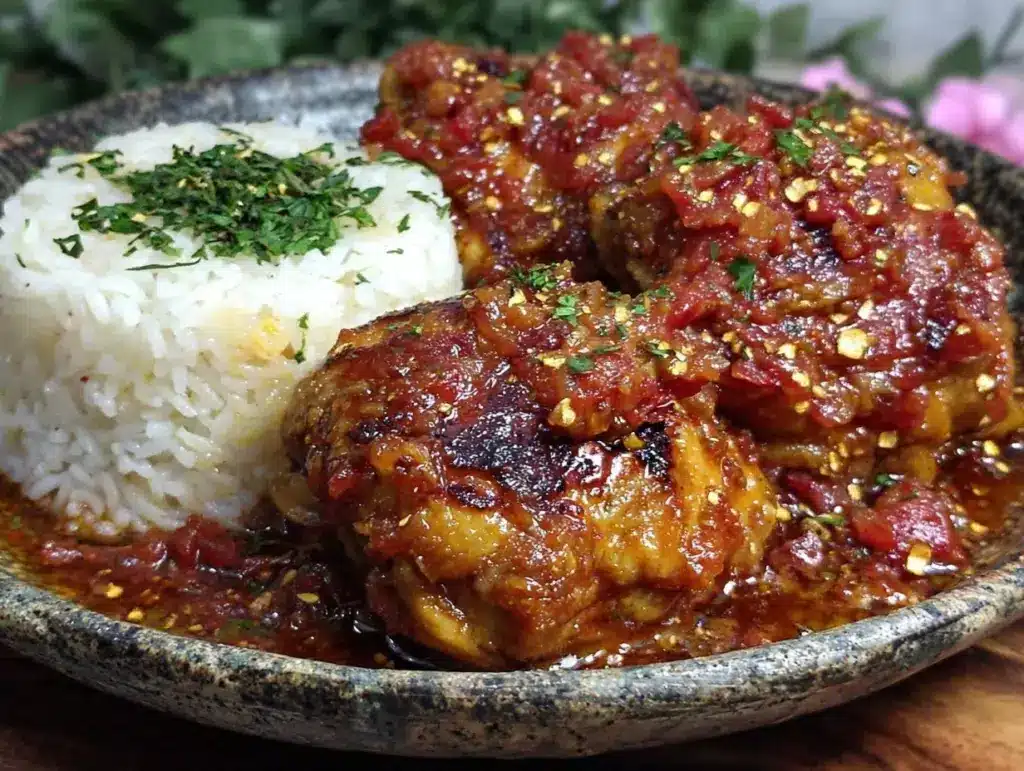
The first time I tasted Nigerian chicken stew, I was sitting around a bustling family table in Lagos, surrounded by laughter, spicy aromas, and the kind of warmth only good food and good company can bring. That stew—rich, vibrant, with a smoky tomato base and tender chicken falling off the bone—felt like a hug from the inside out.
Since then, I’ve made this flavorful Nigerian chicken stew at home more times than I can count, tweaking it here and there to suit my taste buds (and my sometimes impatient cooking style). It’s become my ultimate comfort dinner recipe, the one that fills the house with that irresistible scent and guarantees leftovers for days. If you’ve been craving something hearty, spicy, and deeply satisfying, this stew is exactly what you need.
And yes, it’s easier to make than you think. Stick with me, and I’ll walk you through everything—from the ingredients you’ll want on hand to the little tricks that bring out the best flavor.
Why You’ll Love This Recipe
Okay, real talk: this Nigerian chicken stew has completely redefined what I think of as “comfort food.” Here’s why it’s become a staple in my kitchen:
- Bold, authentic flavors: The blend of tomatoes, peppers, and traditional spices gives it that unmistakable Nigerian kick. I promise, once you smell it simmering, you’re hooked.
- Versatile and filling: Whether you serve it over fluffy white rice, swallow it with fufu, or dunk some crusty bread in it, this stew satisfies every time. I’ve made it for casual weeknights and special family dinners alike.
- Simple ingredients, big impact: You don’t need a million pantry items. Most of these are staples, and the ones you don’t have will quickly become favorites.
- One-pot wonder: Cleanup is a breeze because everything cooks together. I made this after a long day at work with zero fuss and loved how easy it was.
- Kid-tested and approved: My nephew was skeptical at first (he’s picky), but after one bite, he asked for seconds. That’s saying something!
This stew isn’t just food—it’s a little celebration in a pot. It’s the kind of meal that makes you want to slow down, savor every bite, and maybe even call someone to share the recipe.
What Ingredients You’ll Need
Here’s what I love about this ingredient list: you probably have most of this already, or can find it easily at your local grocery or international market. I’ll break down each part so you know why it’s here—and when substitutions work.
- Chicken pieces (about 3 pounds / 1.4 kg): I use bone-in, skin-on thighs and drumsticks for flavor and tenderness. You can mix and match parts, but avoid super lean cuts like breasts alone—they dry out faster.
- Fresh tomatoes (6 medium / ~900g): These form the stew’s base. I prefer plum or Roma tomatoes because they’re meaty and less watery, but vine-ripened tomatoes work too.
- Red bell peppers (3 large): Roasted or fresh, they add sweetness and depth. If you want a smoky note, roast them under the broiler or on a grill first.
- Scotch bonnet peppers (1-2, to taste): The heat! These little guys pack a punch, so adjust according to your spice tolerance. If you can’t find scotch bonnets, habaneros are a decent substitute.
- Onions (2 medium, roughly chopped): Yellow onions give body to the stew, and their natural sweetness balances the heat.
- Garlic (4 cloves, minced): Because garlic makes everything better.
- Ginger (1-inch piece, grated): Adds a subtle warmth and brightness that cuts through the richness.
- Tomato paste (3 tablespoons): This concentrates the tomato flavor and helps thicken the stew.
- Vegetable or palm oil (½ cup / 120 ml): Palm oil is traditional and gives a beautiful color and unique flavor, but vegetable oil works perfectly if you can’t find it.
- Chicken broth or water (1 cup / 240 ml): For simmering and creating that luscious sauce.
- Bay leaves (2): They add subtle herbal notes that you’ll notice even if you don’t spotlight them.
- Thyme (1 teaspoon dried or a few sprigs fresh): Earthy and aromatic, brings the flavors together.
- Salt and black pepper: To taste, obviously.
- Seasoning cubes or bouillon (1 or 2 cubes): Optional but highly recommended for that authentic umami punch. I like Maggi or Knorr.
Pro tip: I always roast my peppers and tomatoes together for about 20 minutes. It’s a little extra step, but wow does it make a difference in flavor depth. Also, if you’re short on time, canned tomatoes and roasted red pepper can work in a pinch.
Equipment Needed
You don’t need fancy gadgets for this Nigerian chicken stew. I’ve made it countless times with just the basics:
- Large heavy-bottomed pot or Dutch oven: This is your best friend here for even cooking and preventing burning. I have a scratched-up cast iron one that’s been with me forever.
- Blender or food processor: For pureeing the roasted tomatoes and peppers into the smooth base. You can use a hand blender too if that’s what you’ve got.
- Wooden spoon or heatproof spatula: I’m old-school and swear by my wooden spoon. There’s just something about stirring with it that feels right.
- Knife and cutting board: For prepping your veggies and chicken.
- Measuring cups and spoons: I eyeball a lot, but measuring the oil and tomato paste helps keep the stew balanced.
P.S. If you don’t have a blender, finely chopping the peppers and tomatoes works, but the stew won’t be as silky smooth.
How to Make It: Step-by-Step
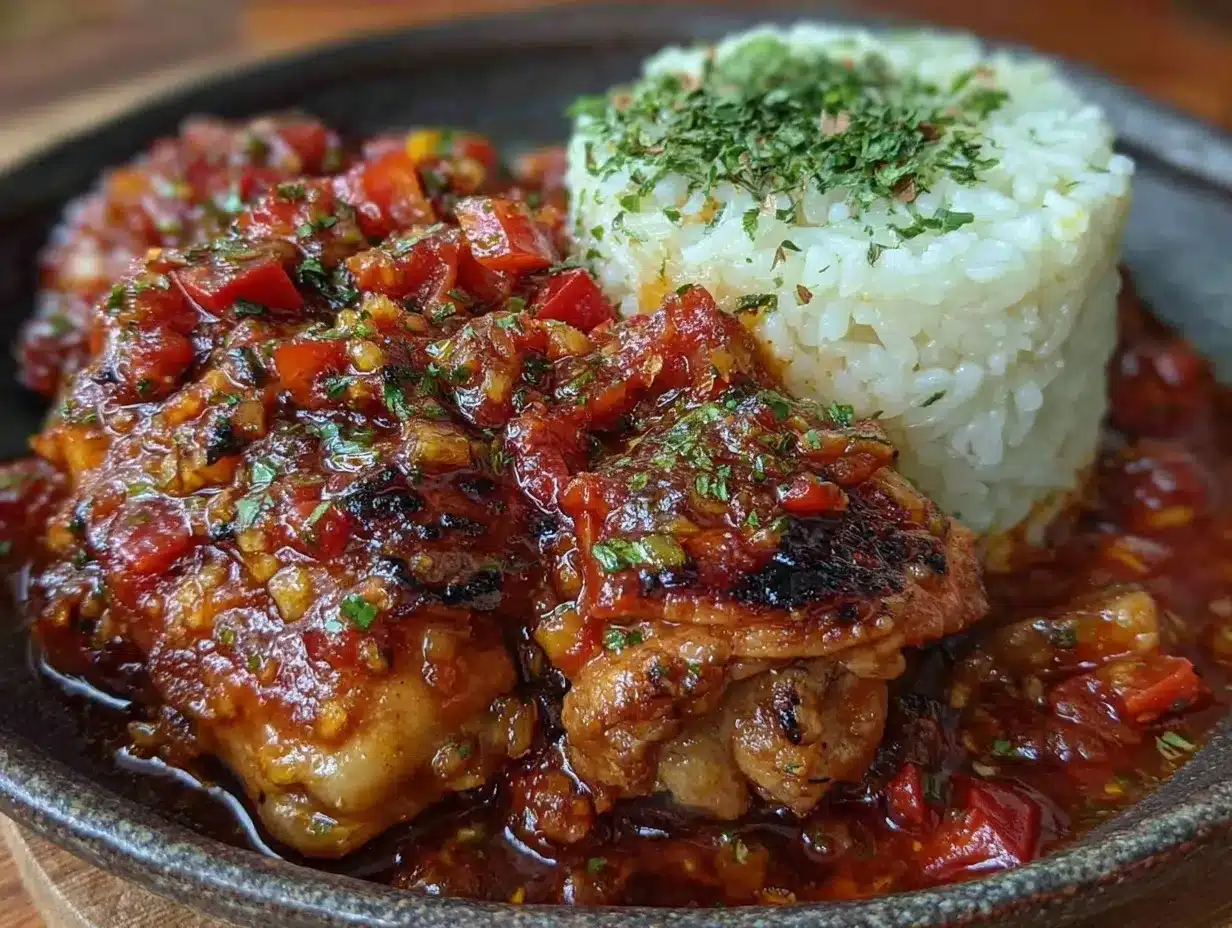
- Prep the chicken (10 minutes)
Rinse your chicken pieces and pat them dry with paper towels. Season generously with salt and pepper. Set aside. - Roast the peppers and tomatoes (20 minutes)
Preheat your oven to 400°F (200°C). Place the tomatoes, red bell peppers, and scotch bonnet peppers on a baking sheet. Roast for about 20 minutes, turning halfway, until the skins are charred and blistered. Once cool, transfer to a blender. - Blend the stew base (2-3 minutes)
Add the roasted vegetables to your blender along with chopped onions, garlic, and grated ginger. Blend until smooth but still a bit textured. This mix is going to be the heart of your stew. - Brown the chicken (10 minutes)
Heat the oil in your pot over medium-high heat. Add the chicken pieces in batches to avoid overcrowding. Brown on all sides—about 3-4 minutes per side. Don’t worry if they don’t cook through; you’re just building flavor here. Remove and set aside. - Sauté the tomato paste and stew base (5 minutes)
In the same pot, add the tomato paste and cook it for 2-3 minutes, stirring constantly. Then pour in your blended tomato and pepper mixture. Stir to combine and let it simmer for about 5 minutes until it thickens and deepens in color. - Add chicken and simmer (30-40 minutes)
Return the browned chicken to the pot. Add chicken broth (or water), bay leaves, thyme, seasoning cubes, and more salt and pepper if needed. Stir gently, cover, and reduce heat to low. Let it simmer for 30-40 minutes, stirring occasionally, until the chicken is tender and the stew has thickened to your liking. - Final taste and adjust (2 minutes)
Taste the stew and adjust seasoning if necessary—sometimes a pinch more salt or a dash of pepper makes all the difference. - Serve up and enjoy!
Scoop generous portions over rice, fufu, or your favorite side. Watch the smiles happen.
Heads up: If your stew looks too watery near the end, remove the lid and let it simmer uncovered for 10 minutes to reduce. Patience pays off!
My Best Tips & Techniques
Alright, I’m about to share the things I’ve learned after making this stew way more times than I should admit.
- Roasting is non-negotiable: It transforms the flavor from plain tomato sauce to something smoky and complex. Don’t skip this—even if you’re in a hurry, try broiling for a few minutes.
- Don’t overcrowd when browning chicken: I learned this the hard way. If you toss all the chicken in at once, it steams instead of browns, and you lose that caramelized flavor.
- Blending the base just right: I aim for a slightly chunky puree—too smooth and it feels less hearty; too chunky and it doesn’t coat the chicken well.
- Simmer low and slow: You want the chicken tender and the sauce thick without burning. Stir frequently toward the end to prevent sticking.
- Adjust heat carefully: Scotch bonnets are fiery. I usually start with one whole pepper, finely chopped, and add more if I want extra kick. Remember, you can always add heat but you can’t take it away.
- Rest before serving: Letting the stew sit off the heat for 5-10 minutes helps the flavors meld. It’s sooo worth the wait.
Ways to Mix It Up
Once you’ve nailed the classic version, feel free to get creative! Here are a few ways I like to switch things up:
- Spicy peanut twist: Stir in 2 tablespoons of peanut butter during the simmering stage for a nutty, creamy depth. It’s a favorite in some Nigerian households.
- Vegetable boost: Add chopped carrots, green beans, or sliced mushrooms with the chicken for extra texture and nutrition.
- Smokier flavor: Use smoked paprika or a dash of liquid smoke if you can’t get palm oil or want a BBQ vibe.
- Coconut milk version: Pour in ½ cup of coconut milk at the end for a silky, tropical touch.
- Herb variations: Swap thyme for rosemary or add fresh parsley at the end for a fresh herbal note.
- Make it a stew pot pie: Use leftovers as a filling under a flaky pie crust—comfort overload.
And if you’re dairy-free or vegan, swap the chicken for hearty mushrooms or tofu and you’re set.
Serving Ideas & Storage
This Nigerian chicken stew is best enjoyed fresh and hot, but it’s just as good the next day.
Serving suggestions:
- Spoon it over steamed white rice—the classic combo.
- Serve with fufu, pounded yam, or garri for a traditional touch.
- Use as a dipping stew for bread or plantain slices.
- Pair with a crisp side salad or sautéed greens to balance the richness.
Storage tips:
- Store leftovers in an airtight container in the fridge for up to 4 days.
- Reheat gently on the stovetop or microwave, adding a splash of water if it seems thick.
- Freeze in portioned containers for up to 3 months. Thaw overnight in the fridge and reheat thoroughly.
Pro tip: I often make a big batch on the weekend and use leftovers for quick lunches or dinner when I’m wiped out.
Nutritional Info & Health Benefits
I’m no nutritionist, but here’s what makes this stew a solid choice when you want comfort food that doesn’t feel like a total indulgence.
| Nutrient | Per Serving (1 cup) |
|---|---|
| Calories | 320 |
| Protein | 28g |
| Carbohydrates | 10g |
| Fat | 18g |
| Fiber | 2g |
Why it’s good for you: The chicken provides a great protein boost, which keeps you full longer. Tomatoes and peppers are loaded with vitamins A and C, plus antioxidants. Using palm oil adds healthy fats and a unique set of nutrients, though you can swap for vegetable oil if you prefer. This stew feels hearty but isn’t weighed down by heavy creams or excess sugar.
Heads up: It does contain moderate fat from the oil and chicken skin, so balance it with fresh sides if you’re watching intake.
Final Thoughts
So there you have it—my flavorful Nigerian chicken stew recipe, a genuine comfort dinner that’s as soul-soothing as it is delicious. I know I’ve gone on a bit, but when a recipe hits all the right notes—rich, spicy, tender, and downright addictive—you want to share it with everyone you know.
This stew has earned a permanent spot in my meal rotation. It’s perfect for family dinners, impressing guests, or just treating yourself after a long day. Plus, the leftovers are even better (if you can resist eating it all at once).
Don’t be afraid to make it your own: tweak the spice level, add your favorite veggies, or try one of the variations. And if you do make it, please drop a comment below or tag me on Instagram—I love seeing your kitchen wins and sharing cooking stories.
Happy cooking, and may your kitchen soon smell as incredible as mine does right now!
FAQs
Q: Can I use boneless chicken for this stew?
A: Absolutely! Boneless chicken thighs work best because they stay juicy. Just reduce the simmering time to about 20-25 minutes since they cook faster than bone-in pieces.
Q: What can I substitute if I can’t find scotch bonnet peppers?
A: Habaneros are the closest substitute and will give you similar heat. If you want less spice, try a small jalapeño or just reduce the amount. Remember, you can always add more heat later!
Q: How do I know when the stew is done?
A: The chicken should be tender and cooked through, falling off the bone if using bone-in. The sauce will have thickened and turned a deep red color with a glossy finish. You’ll also smell that rich, roasted tomato aroma filling your kitchen.
Q: Can I make this stew ahead of time?
A: Yes! In fact, it tastes even better the next day after the flavors have had time to meld. Store it in the fridge for up to 4 days or freeze portions for up to 3 months.
Q: Is this stew spicy for a beginner?
A: It can be, but you control the heat. Start with one scotch bonnet pepper or omit it altogether if you’re sensitive to spice. The stew still has tons of flavor without that fiery kick.
Pin This Recipe!
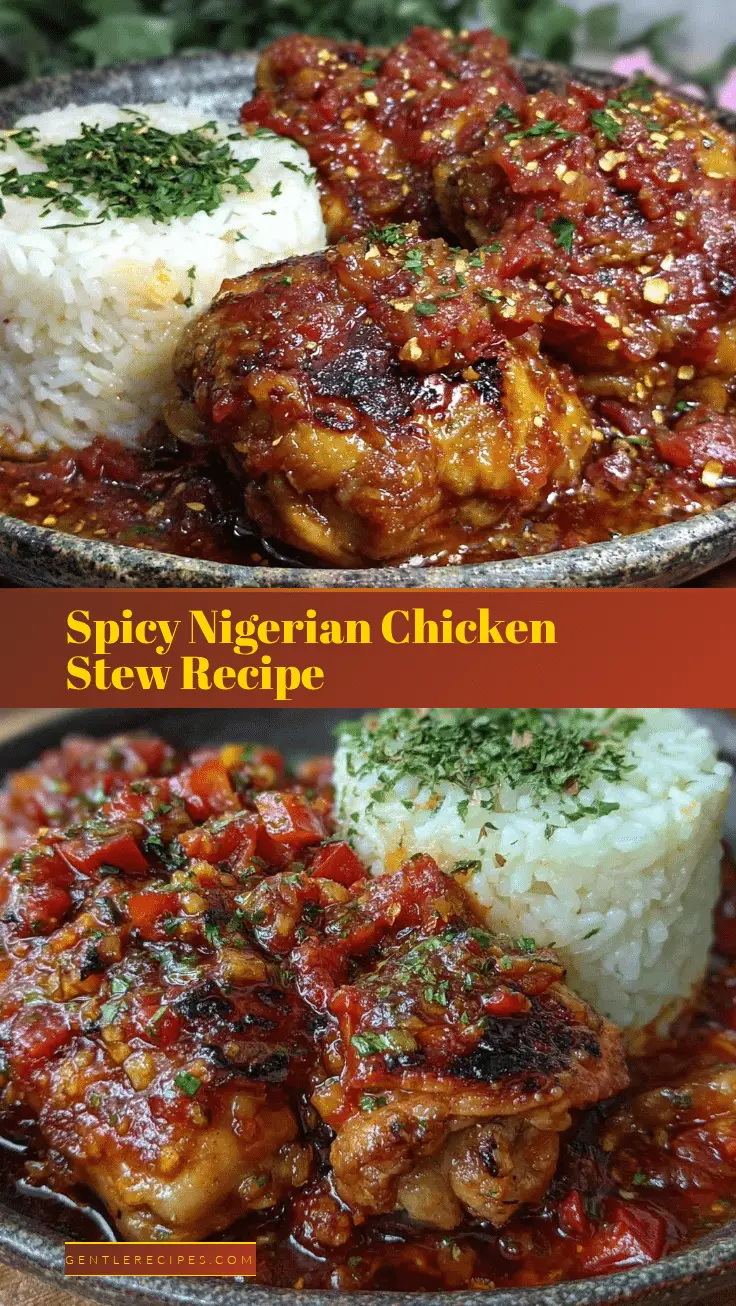

Flavorful Nigerian Chicken Stew Recipe Easy Homemade Comfort Dinner
- Total Time: 1 hour 15 minutes
- Yield: 6 servings 1x
Description
A rich, vibrant Nigerian chicken stew with a smoky tomato base and tender chicken, perfect for a comforting and hearty meal.
Ingredients
- 3 pounds bone-in, skin-on chicken pieces (thighs and drumsticks)
- 6 medium fresh tomatoes (~900g / 2 pounds)
- 3 large red bell peppers
- 1–2 scotch bonnet peppers (to taste)
- 2 medium yellow onions, roughly chopped
- 4 cloves garlic, minced
- 1-inch piece ginger, grated
- 3 tablespoons tomato paste
- ½ cup (120 ml) vegetable or palm oil
- 1 cup (240 ml) chicken broth or water
- 2 bay leaves
- 1 teaspoon dried thyme or a few sprigs fresh thyme
- Salt and black pepper to taste
- 1 or 2 seasoning cubes or bouillon (optional, e.g., Maggi or Knorr)
Instructions
- Rinse chicken pieces and pat dry. Season generously with salt and pepper. Set aside.
- Preheat oven to 400°F (200°C). Place tomatoes, red bell peppers, and scotch bonnet peppers on a baking sheet. Roast for about 20 minutes, turning halfway, until skins are charred and blistered. Let cool.
- Transfer roasted vegetables to a blender. Add chopped onions, garlic, and grated ginger. Blend until smooth but slightly textured.
- Heat oil in a large heavy-bottomed pot or Dutch oven over medium-high heat. Brown chicken pieces in batches, about 3-4 minutes per side. Remove and set aside.
- In the same pot, add tomato paste and cook for 2-3 minutes, stirring constantly. Pour in blended tomato and pepper mixture. Stir and simmer for about 5 minutes until thickened and deepened in color.
- Return browned chicken to the pot. Add chicken broth or water, bay leaves, thyme, seasoning cubes, and additional salt and pepper if needed. Stir gently, cover, reduce heat to low, and simmer for 30-40 minutes until chicken is tender and stew thickens.
- Taste and adjust seasoning as needed.
- Serve hot over rice, fufu, or with your favorite side.
Notes
Roasting the peppers and tomatoes is essential for deep flavor. Avoid overcrowding the pot when browning chicken to ensure caramelization. Let stew rest 5-10 minutes before serving to meld flavors. If stew is too watery near the end, simmer uncovered for 10 minutes to reduce.
- Prep Time: 15 minutes
- Cook Time: 60 minutes
- Category: Main Course
- Cuisine: Nigerian
Nutrition
- Serving Size: 1 cup (about 1 servi
- Calories: 320
- Fat: 18
- Carbohydrates: 10
- Fiber: 2
- Protein: 28
Keywords: Nigerian chicken stew, Nigerian stew recipe, chicken stew, comfort food, spicy chicken stew, one-pot meal